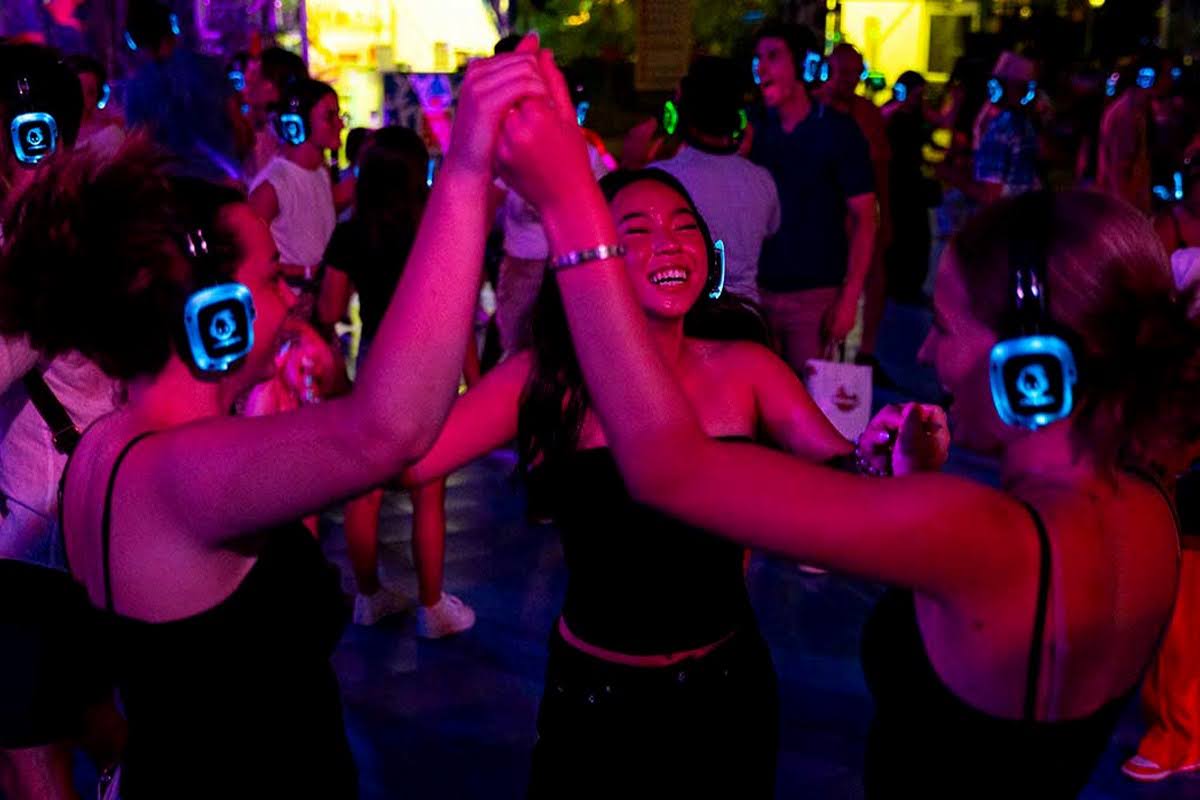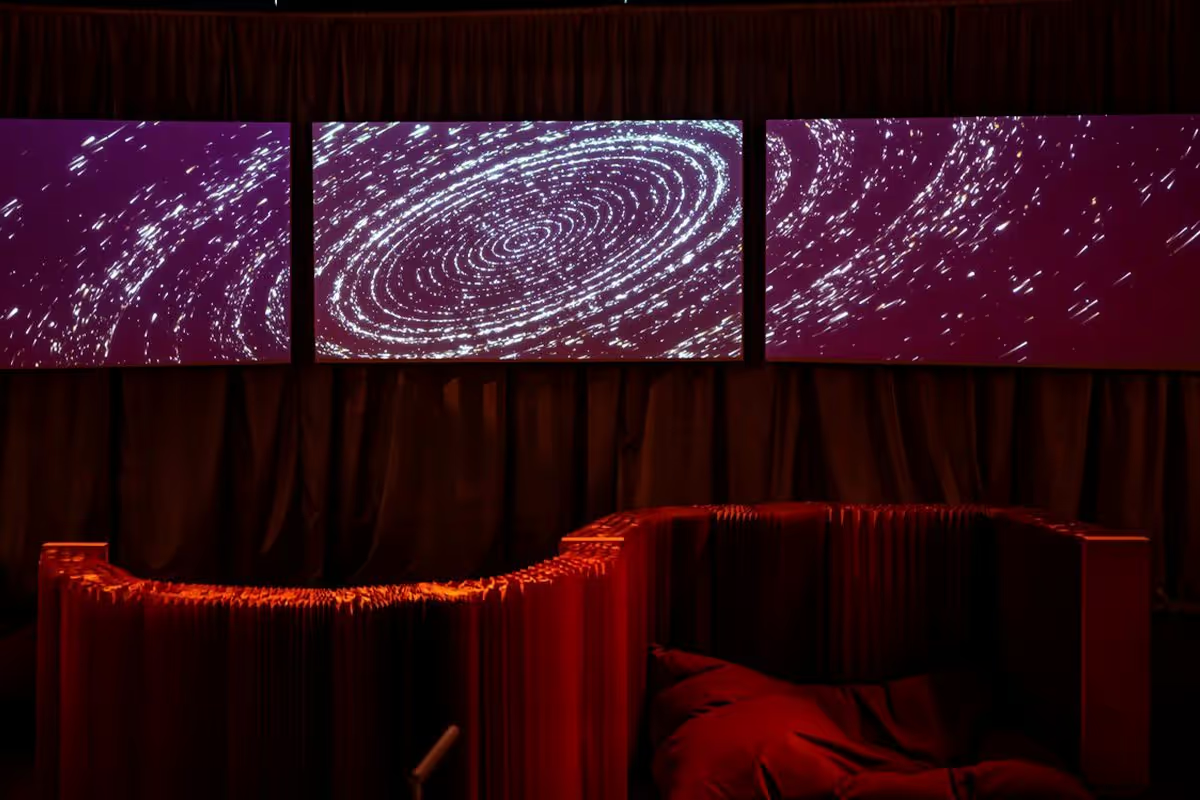
Visual spectacle — the wow-factor visuals, the Instagrammable sets, the larger-than-life projections — has long been the favored child of experiential design. But lately, we’ve noticed a wave of activations, installations, and performances prioritizing audio as their core storytelling device. From meditative listening rooms to sonic dreamscapes and binaural theater productions, experiential creators are tuning into a new frequency. Welcome to the rise of sound-based immersive experiences.
WHY SOUND IS HAVING A MOMENT
The recent boom in sound-led experiences can be traced to two converging trends:
- The public’s growing appetite for mindfulness and wellness. Instead of demanding attention, immersive sound has the power to guide and soothe. It taps into our emotions, sometimes without us realizing it. And in a world where overstimulation is the norm, sound-based experiences offer a refreshingly intimate reset.
- Tech’s ability to deliver hyper-precise, spatialized audio environments. Thanks to innovations in 3D audio, binaural sound recording, and real-time acoustic rendering, creators can now sculpt audio landscapes with pinpoint accuracy. These technologies allow for sounds that move with the listener, creating the illusion of proximity, motion, and environment. The result is an enveloping audio space that feels hyper-personal and deeply immersive.
FOUR EXAMPLES THAT SPEAK VOLUMES
So what does this sound like? Here are four sound-based immersive experiences that are making noise.
1. Viola’s Room
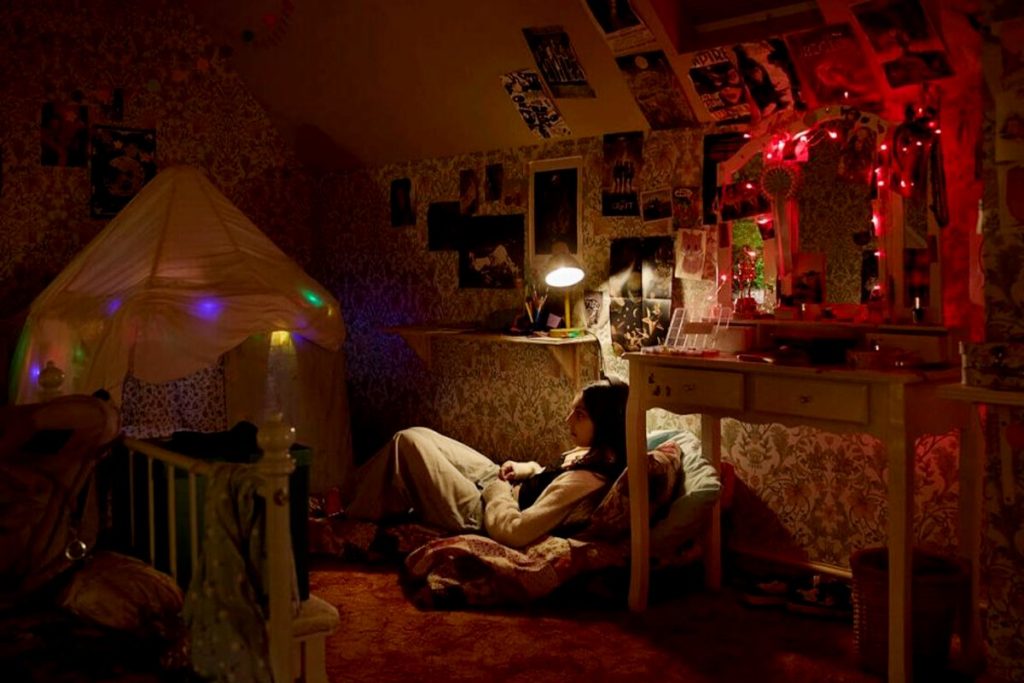
Punchdrunk, the innovative minds behind everyone’s favorite legacy immersive experience, Sleep No More, has launched a new sound-driven production called Viola’s Room. Guests enter barefoot and alone, following a rope through a dim labyrinth. Meanwhile, a hypnotic narration by Helena Bonham Carter leads them through a dreamlike tale. The entire experience hinges on 360-degree binaural sound — whispers behind you, footsteps in front and a voice that feels like it’s inside your head. Without a single live actor in the space, Viola’s Room proves that sound alone can tell a rich, emotional story.
Where to hear it: June 17 – October 19, 2025, at The Shed, NYC
2. Dreamachine
Designed by Collective Act and originally commissioned as part of UNBOXED: Creativity in the UK, Dreamachine is not something you watch — it’s something you feel. Participants recline in lounge chairs and close their eyes as synchronized lights and a powerful, enveloping soundscape take them on a deeply personal internal journey. The lights create hallucinatory visuals behind the eyelids, but it’s the sound, composed by Grammy-nominated Jon Hopkins, that anchors and guides the experience.
Where to hear it: Various global locations; check dreamachine.world for tour dates
3. Chromasonic Field
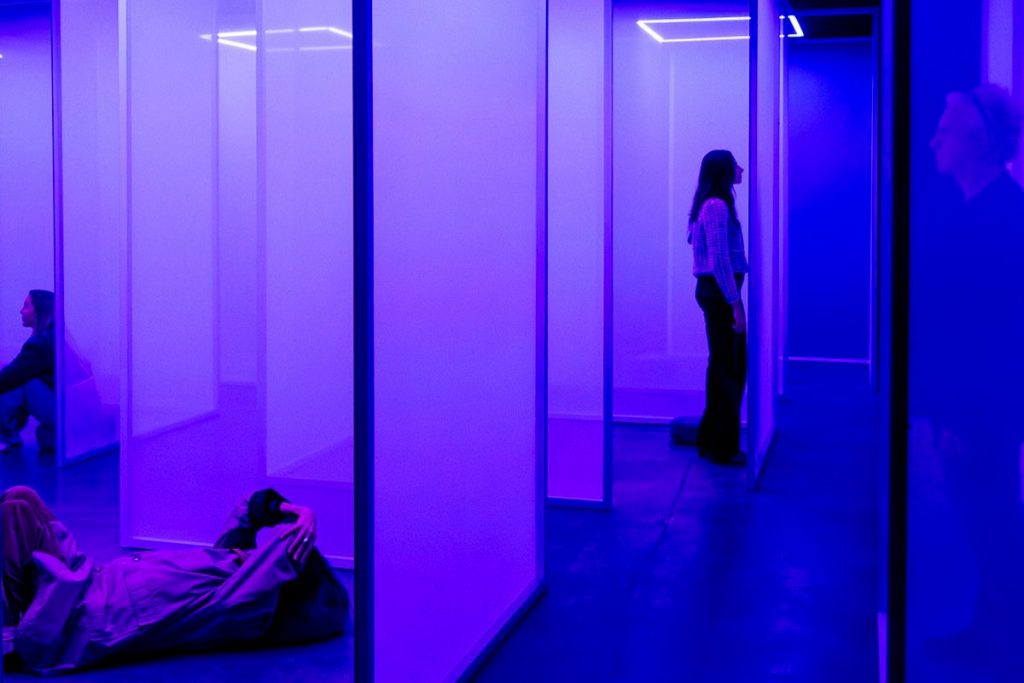
Chromasonic Field — a 10,000-square-foot immersive wellness space in LA’s Arts District — transforms light into sound and sound into light in real-time, using proprietary Refrequencing Tech that turns perception on its head. Fresh off a preview at Salone del Mobile with Google, the installation invites guests to move through a constellation of 21 sensory nodes, each pulsing with spatialized audio and translucent scrims of colored light. The result? A dreamlike blend of art, neuroscience, and next-gen tech designed to promote deep presence and emotional clarity.
Where to hear it: Chromasonic Studio, Arts District, Los Angeles
4. The Hum
The Hum — a vibroacoustic chamber developed by founder and CEO of Sound Connective and XLISTER Gen Cleary — goes even deeper, using 360-degree audio, curated rhythms and synchronized vibrations to guide guests into a transformative state of relaxation.
As Cleary explains, “The Hum is, above all, a musical entertainment experience positioned at the intersection of the science of sound and wellness. Our primary focus is on assisting people in reconnecting with themselves, delving into the multifaceted dimensions of sound beyond mere hearing.”
Where to hear it: Sound Connective, NYC (appointments required)
WHAT IT MEANS FOR EXPERIENTIAL CREATORS
Sound-led experiences are often less expensive to produce than their visual counterparts, require less real estate, and can offer a more profound emotional impact with lighter physical infrastructure. They also open doors to accessibility and inclusion. A blindfolded or eyes-closed activation levels the playing field, inviting everyone to connect through the universal language of sound.