
The hospitality industry has a love problem. I say this as someone who has spent most of her career as a travel writer, loving hotels—good ones, obviously, but honestly decent ones, too. And yet lately I've noticed something: I am loyal to hotels I do not love.
Hotels are good at inspiring loyalty through points and perks, like late checkouts and room upgrades. Being able to linger in my room until 2pm rather than rushing out the door by 11 am is a reason to stay. But it's rational, not emotional. If I were to lose my Marriott Gold Elite status, I'd likely choose an independent hotel ten times out of ten. Here's why: Marriott knows what pillows I prefer, my go-to room service order and which floor I sleep best on. But they still greet me with a generic welcome card and a bowl of green apples. And they charge me $8 for a bottle of water.
Hotels are inherently experiential spaces
They're one of the few commercial environments where someone spends hours, sleeps, eats and potentially has meaningful moments. And yet most are designed for transactions. The experiential industry is built on the idea that the most powerful brand moments are emotional, relational and memorable. Hotels should be the proof of that argument; most are squandering it.
There are hotels that gesture toward experiential philosophy. Signature scents, impressive art collections, murder mystery nights. For the most part, these are tacked-on attempts to differentiate rather than an underlying commitment. The question isn't about what experience you offer, but whether those experiences speak to your organizing principle. Are they authentic or performative?
There are exceptions
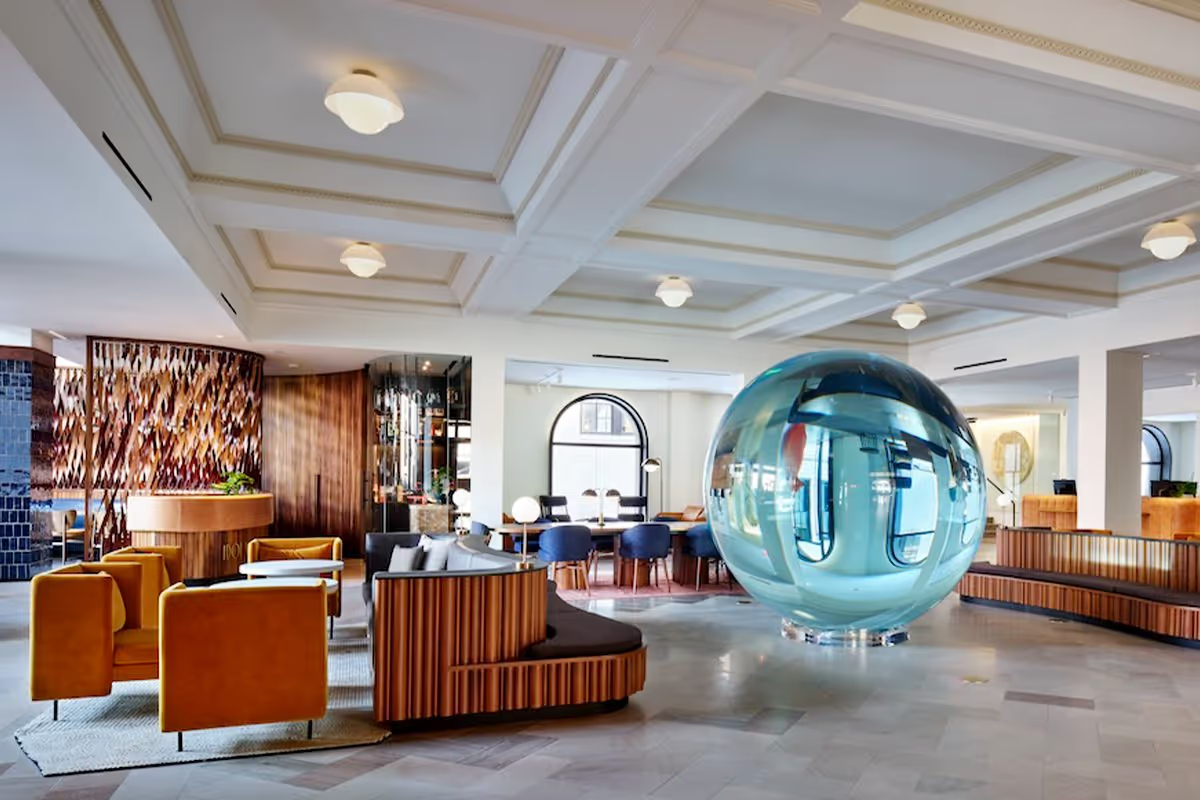
For Kimpton, pet-friendliness is an organizing principle: little treats, bowls and beds waiting for your dog on arrival, wine hours that create a genuine sense of community, even if not fully activated. For 21c, the art is the reason the hotel exists. The Ace Hotel has managed to scale the lobby as a third space without losing coherence. You could make the case for Soho House, but I'd argue they're more about admission than recognition. They know your type, not you.
Luxury Family Hotels, a recent discovery, is my new north star. I have never stayed and I already love them. They offer two hours of complimentary childcare per night of stay, an indoor pool, a cinema room, a family library and a kids' club. Bedtime milk, cookies and story time are part of the ethos. Packages like "Baby's First Break" and "Toddler in Tow Break" don't feel hollow because they aren't. The hotel is designed around a life stage, not a demographic—and you can feel the difference.
What's most interesting to me is not that Luxury Family Hotels has managed to get me before I even set foot inside, but that bigger chains like Marriott have everything they need to do the same. They know where I travel, how often, what I order and how I sleep. The leap isn't technological. AI now makes personalization at scale genuinely achievable. The leap is imaginative.
They could have sparkling water waiting because they noticed I always order it. Or they could simply ask better questions. Not just which floor I sleep best on, but whether I prefer salty or sweet. My husband would find potato chips waiting in the room. I'd find chocolate. Instead, we both get a bowl of green apples.
The hotels I love most aren't necessarily the most expensive or the most impressive
Two years ago, a hotel left a branded cloth for cleaning my eyeglasses on the nightstand. I'm still talking about it. It cost almost nothing, but it communicated that someone had noticed me.
Guests have been handing over everything a great host would need. The chains that figure out what to do with it—not to sell to them, but to see them—will be the ones people actually love.