
At this year’s Super Bowl, there were some clear winners: The Philadelphia Eagles. Kendrick Lamar. Kendrick Lamar’s jeans. Not on the winning list (besides the obvious): The much-hyped commercials, which over-featured celebrities and under-featured creativity — to the tune of about $8 million per 30-second spot.
Meanwhile, Adam Richman and Joe Silberzweig, XLISTERs and co-founders of Medium Rare — the biggest producer of Super Bowl events outside the NFL — told Fortune they expect to rake in more than $15 million in revenue and around $4.5 million in profits from three epic parties, produced in partnership with Guy Fieri, Shaquille O’Neal and Sports Illustrated.
AT THE SUPER BOWL, EXPERIENTIAL STEALS THE SHOW
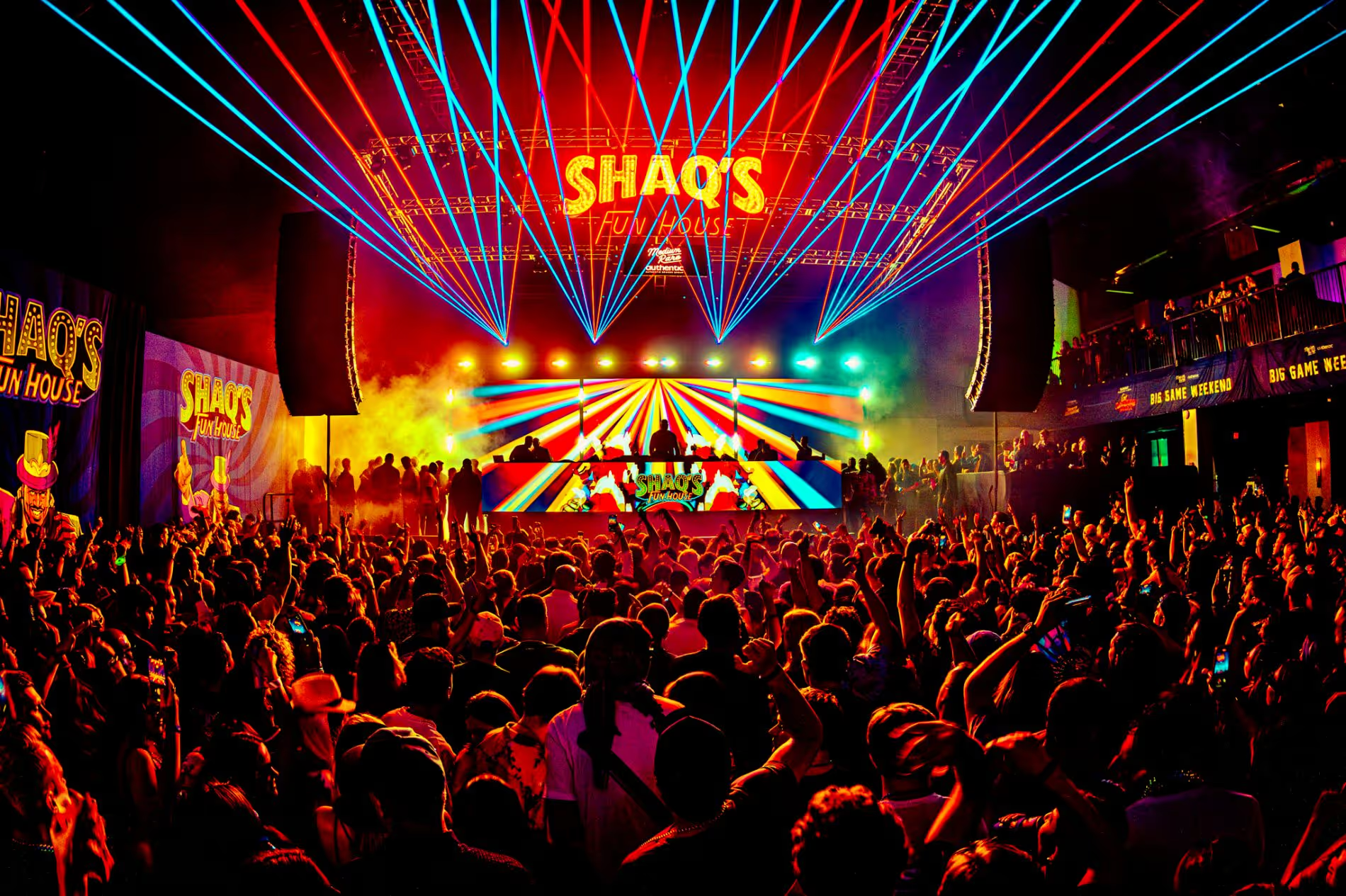
Part carnival, part music festival, Shaq’s Fun House is the O.G. celebrity collab for Silberzweig and Richman, whose business model is based on I.P. co-ownership and brand sponsorship. The event was right at home at Mardi Gras World, which hosted some 5,000 attendees, a ferris wheel, Ludracris and custom activations for Shaquelicious, Carnival, BeatBox and more.
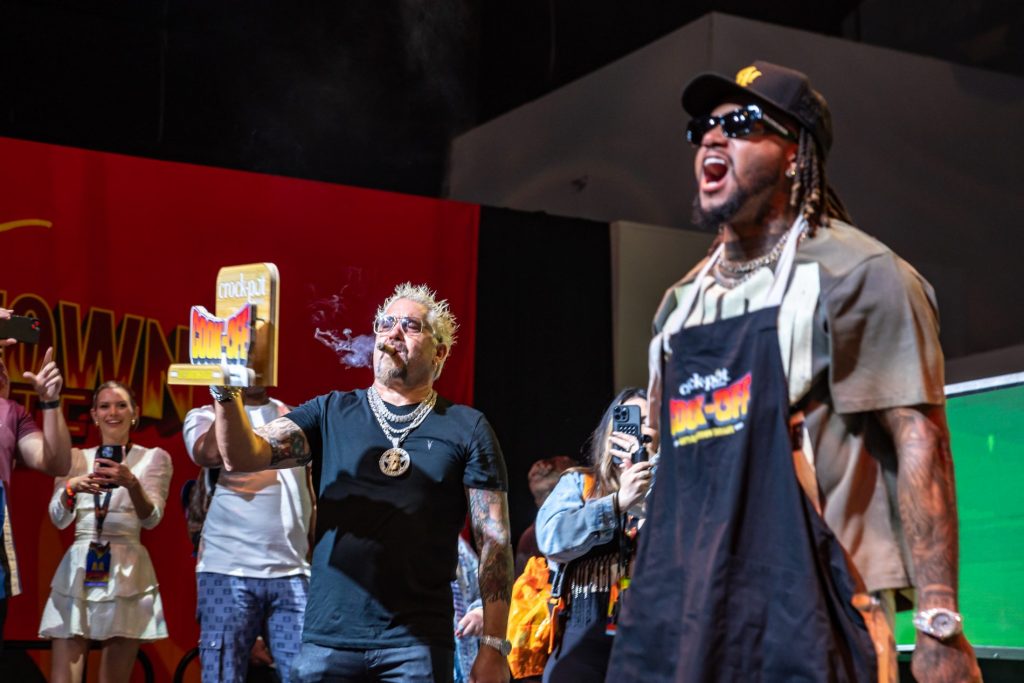
Guy’s Flavortown Tailgate wasn’t the only food festival in town — see Pepsi’s NOLA Eats Fest, Complex’s Family Style Food Festival — but it was certainly the biggest, with main stage cookoffs, football tosses, performances by Diplo and Flava Flav and tons of free food. And then there was Sports Illustrated The Party, one of the weekend’s most exclusive ticketed events headlined by Dom Dolla and Diplo (and featuring branded experiences from Celsius, Anheuser-Busch and Verizon).
Parties, Stunts and the CAESARS Superdome
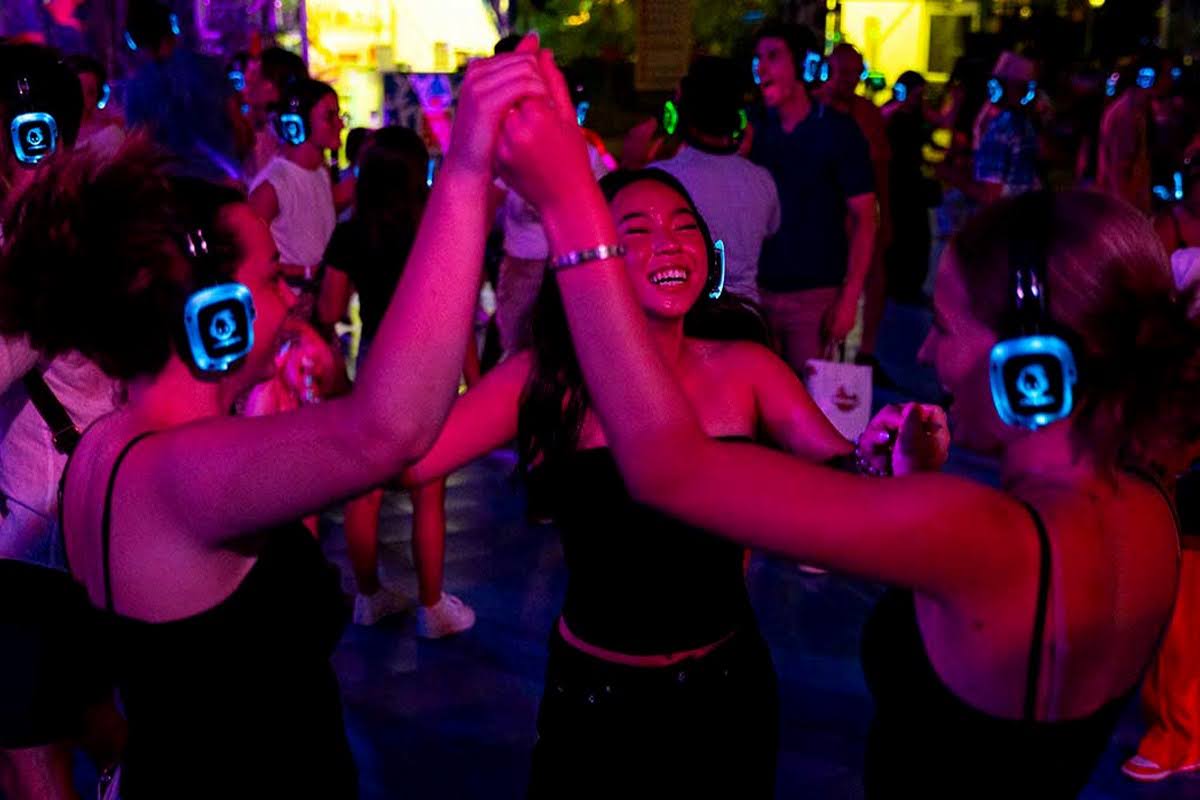
There were other parties, too. Of note: Uber’s star-studded event, featuring sparkling gold-tiled football sculptures, drumlines and Travis Scott; the GQ Bowl, which paired football stars and fashion; and “The Block,” a 25,000 square foot hospitality event hosted by Athletes First and held in interconnected mansions in downtown New Orleans.
And the list of brands that took their money off the big screen and onto the road goes on—literally in the case of Häagen-Dazs, which hoped to amplify their Super Bowl ad debut with an ice cream-inspired 1963 Cadillac Series 62 convertible that traveled from L.A. to NOLA.
And let’s not forget the Caesars Superdome itself, which underwent a massive $560 million renovation — just in time for Taylor Swift’s takeover last October (and the 73,000 attendees who packed the stands). The multi-year upgrade modernized the iconic venue with expanded concourses, new suites, enhanced food and beverage offerings and a state-of-the-art sound system — because if there’s one thing both Swifties and football fans demand, it’s pristine acoustics. The facelift also included revamped premium seating and new digital displays, ensuring the Super Bowl (and any other spectacle, from concerts to college football championships) will always deliver.
WHAT BRANDS CAN (AND SHOULD) LEARN FROM SUPER BOWL EXPERIENTIAL
While this year’s Super Bowl ads left a lot to be desired (and cost a fortune to execute) the real action wasn’t on screen — it was on the ground. The biggest wins weren’t just for the Eagles or Kendrick’s flares but for the brands that bet big on culture-driving, can’t-miss experiences. And the playbook couldn’t be clearer: fans don’t just want to watch the hype, they want to live it. The brands that get this — who go beyond passive ads and into full-throttle all-sensory moments — aren’t just winning the weekend. They’re winning the long game.