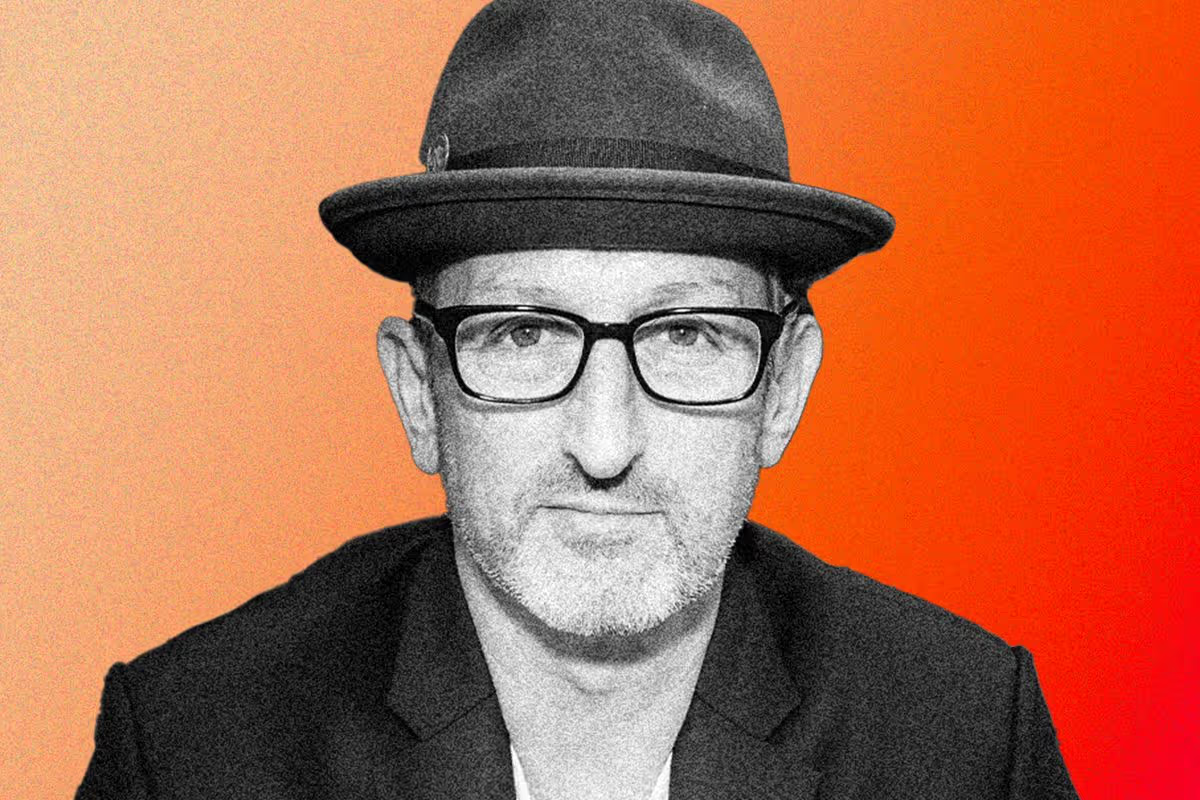

Ahead of XP Land’s Live From the Edge on October 7, we sat down with Jamie Reilly, XP Council member and one of the speakers taking the stage to fill in the blank on “The future of XP is ___.”
As General Manager, Sports & Entertainment at Moment Factory, Reilly oversees the Montreal studio’s sports work, including the Messi Experience, a 20,000-square-foot walkthrough of Messi’s life and career opening soon at American Dream (more on that below). The studio, which marks its 25th anniversary this year, is behind the Lumina Night Walks, with more than 5 million visitors across eight countries, and AURA at Montreal’s Notre-Dame Basilica, and created the new immersive experience at Edge in Hudson Yards in partnership with Journey and SOFTlab.
For Reilly, the opportunity in sports is the connection that goes beyond game day, especially for the fans who will never see a live game.
Geraldine Campbell: Was your way into experiential intentional or accidental?
Jamie Reilly: I joined Cirque du Soleil right out of school. I was barely 23 years old, made my way up the ladder quickly, and managed a number of productions around the world for 13 years — literally managing clowns.
GC: Where do you see the biggest opportunity in experiential right now?
JR: Obviously, I oversee sports, and I find, with what’s happening in sports, as we see with the World Cup and the Knicks, so many opportunities to engage with audiences and to create a connection that goes beyond game day. I remember having a conversation with the NBA a little over a year ago. The NBA has quantified that they have 1 billion fans worldwide, and less than 1 percent of this fan base will, in their lifetime, see a live NBA game.
When you think of experiences like Messi or what we did with Real Madrid, we’re barely scratching the surface of what is possible or even how we’re looking at these venues — not as dormant venues for sports, but as dynamic, programmable environments that can become much more embedded into a community, almost like a theme park.
GC: Speaking of the Messi Experience, how do you design for superfans and for people who just know the name?
JR: One of the primary elements we focus on, before we even think of what the content is here or what the interactive experience is there, is: What’s the journey? So we’ll ensure there's elements where a superfan can spend more time and understand the granularity of the data and the details, while somebody else can say, “Ah, okay, he’s won this, he’s from Argentina, this is how he grew up.”
People get a replica of his childhood bedroom and really connect to his upbringing, which obviously influenced who he became. We did a digital double of him, and people get to sit in the locker room and hear Messi’s speech to his team right before the last match of the last World Cup, where they won. We replicated the moment when they came back to Buenos Aires and did their victory tour, and you get to sit as if you were on the bus, with the fans cheering you on as you’re arriving.
GC: At Edge, your rooms sit next to one of the best views in New York. How do you design around that?
JR: You go to an observation deck, you have the most epic view of New York City, and the goal is never to compete with that, because that’s the showcase. We were able to work with Edge and some of the partners to create rooms that add a world of illusion, where you can play, and you’re looking at New York through a different lens.
GC: A lot of people seem to be pulling away from screens right now. How do you think about technology?
JR: The mission statement of Moment Factory is “We do it in public.” The thought of the founders was to use technology not as a tool to separate people, but to bring people together.
We did a very small activation a number of years ago at InfoComm. The day before the conference opened, I went on this massive exhibit floor. Then at 5 p.m., they’re like, “Okay, lights out.” I’m looking at all of these exhibit booths, LEDs everywhere, state of the art, and they’re all black squares. Technology is just technology if you don’t have the right level of creative intent.
GC: More stores are being built around experience. What does it take to do that well?
JR: You do have to be true to the brand, because if the experience isn’t connected to what your brand is, then it becomes just entertainment.
With Arc’teryx for their new flagship store in New York, we did a huge LED cube, which we called the weather station. We basically replicated various weather patterns as if you were at the top of the mountain. So you have the rain, the summer version, the winter version, the storm version, and then as if you’re landing and you’re going heli-skiing and you’re alone. It is very experiential, but it has to be very much anchored in why people are going into the store to begin with.
GC: How do you measure success?
JR: Depending on the client, they may have different objectives, whether that’s quantitative, if it’s linked to an ROI and ticket sales, or engagement, and then there’s a number of social media metrics. But for me, I always come back to this with our clients: if people don’t feel emotionally connected to what we’re doing, the rest is going to be hard to achieve. Once people feel emotionally engaged and loyal, the rest will come.
We did an activation for Destination Canada in the Vanderbilt Hall of Grand Central Station. Instead of being in the sky, the Northern Lights are on the floor. We found two throat singers from the Yukon Territory, with whom we recorded a soundscape. Destination Canada brought the director of the Northern Lights tour guides from the Yukon. He came back out and he was crying: “I’ve never thought I could see the lights in that way.” For me, after that, you don’t really need any other metric.