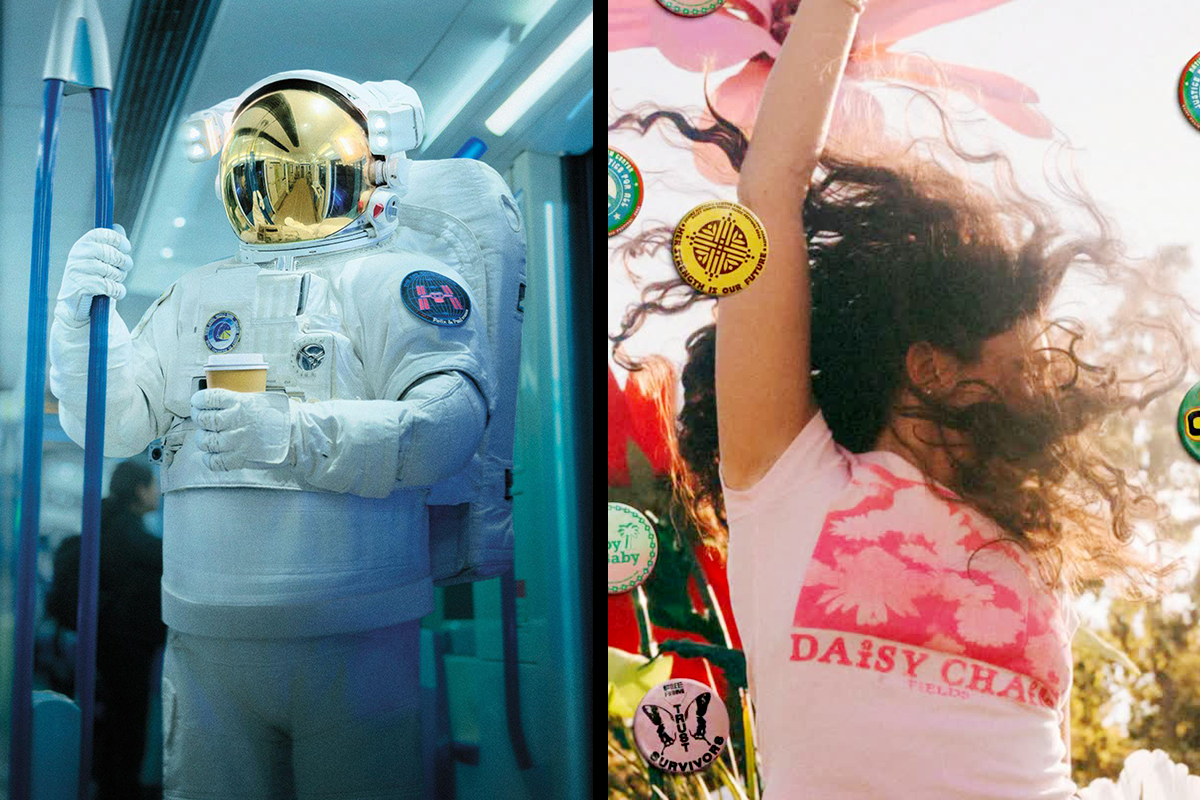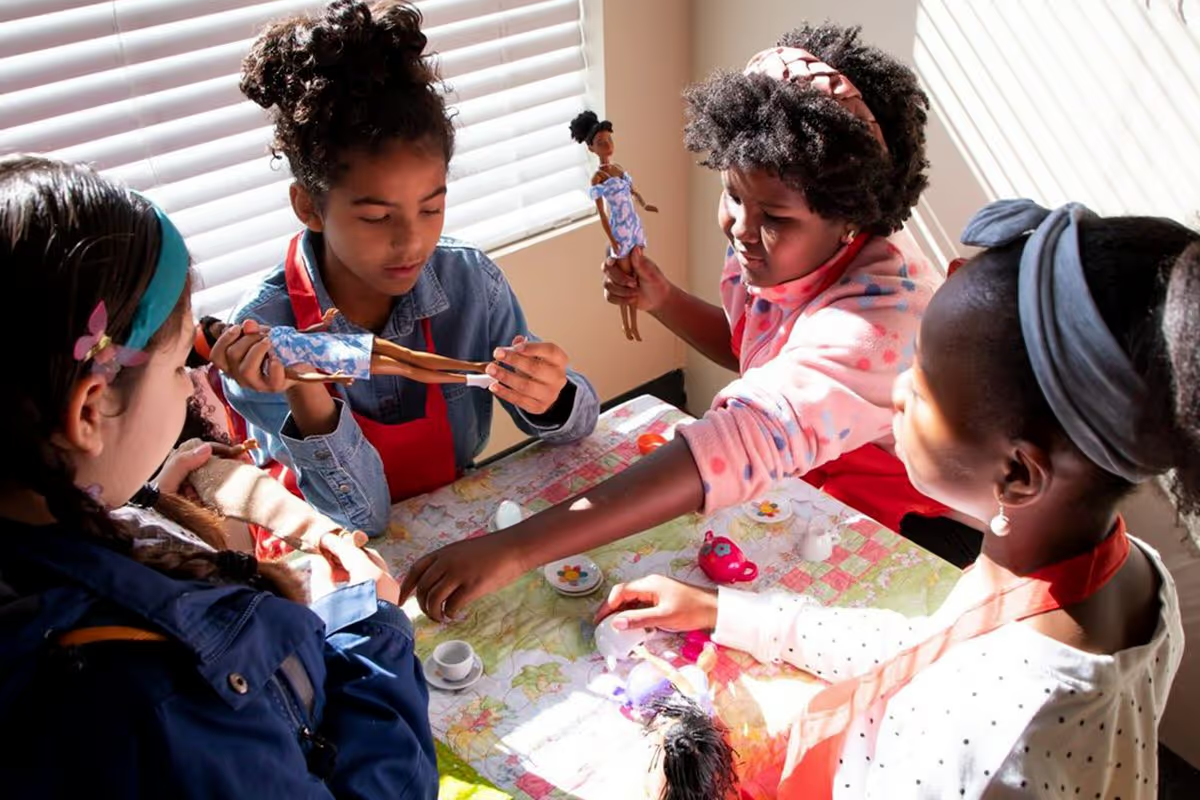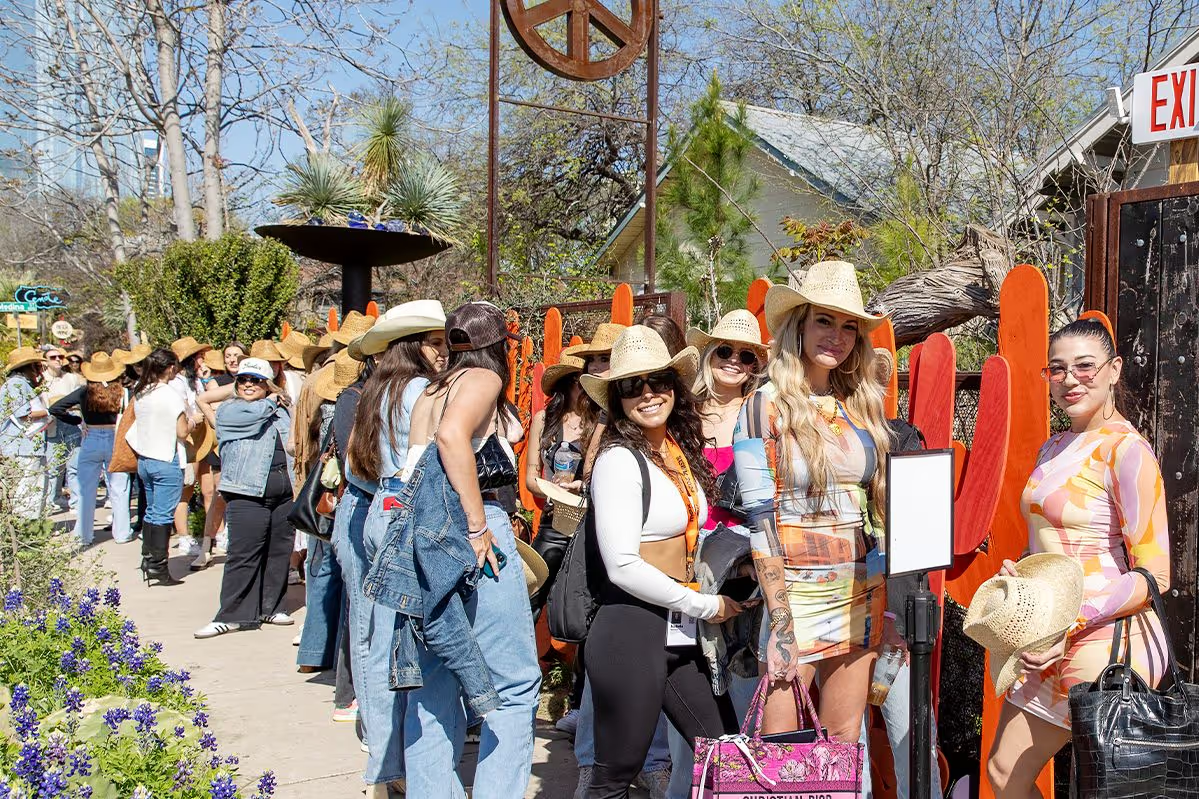

I don't know what happened at Coachella this year, but I know all the best swag.
Scroll through the recap content and there's not a ton on the headliners. You won't find the surprise guest, the crowd moment or the set that made someone cry. You'll find the tote. The branded canteen. The influencer cataloging the line she stood in at 10am for exclusive merch so she'd have something to show for it.
And it's not just the desert. Sephoria. Ulta World. March Madness. Dreamforce. Cannes Lions. The haul video has become the only recap that gets made, shared or noticed — across completely different event types, audiences and budgets. Same format every time: here's everything I got, evaluated item by item, with approximately zero mention of anything that actually happened there.
That's not an audience problem. That's a flywheel we built.
HERE'S HOW IT HAPPENED
Brands needed to justify experience budgets. Social shares were a clean, defensible KPI — easy to screenshot, easy to put in a deck, easy to point at when someone asks what the experience did. So brands pushed for better swag to increase reach. Audiences responded. Content performed. The brief next year asked for something even more shareable.
Now the swag has to be better every single time or people are actively annoyed. The budget for the thing you put in the bag has quietly eaten the budget for the thing you actually came to feel. And somewhere along the way, the creative brief stopped asking "what's the emotional connection we want to build?" and started asking "what's the most viral way for people to receive the thing?"
We optimized for lines and content. Not for connection. And now we're stuck in a self-feeding loop.
HOW A WATER BOTTLE BEAT A SOUND TUNNEL
I watched it happen in a budget meeting.
We were planning an intimate marketing dinner — clients, prospects, the kind of room where relationships actually get built. Someone proposed an immersive tunnel of sound. Genuinely memorable. A conversation starter. The kind of thing people would describe to someone else the next day.
It got nixed. The budget went to branded water bottles instead.
And here's the thing — I get it. The experience costs more. There were real tradeoffs. But we never asked the holistic question: what if we'd done both differently, at a different location, with less swag but more moment? We evaluated it as a line item. Not as an investment in what the room would remember or whether those people would want to be in a room with us again.
That's where the conversation actually goes wrong. Not in the swag versus experience debate. In the measurement model, this makes the water bottle the rational choice every single time.
WHAT THE MASTERS GOT RIGHT
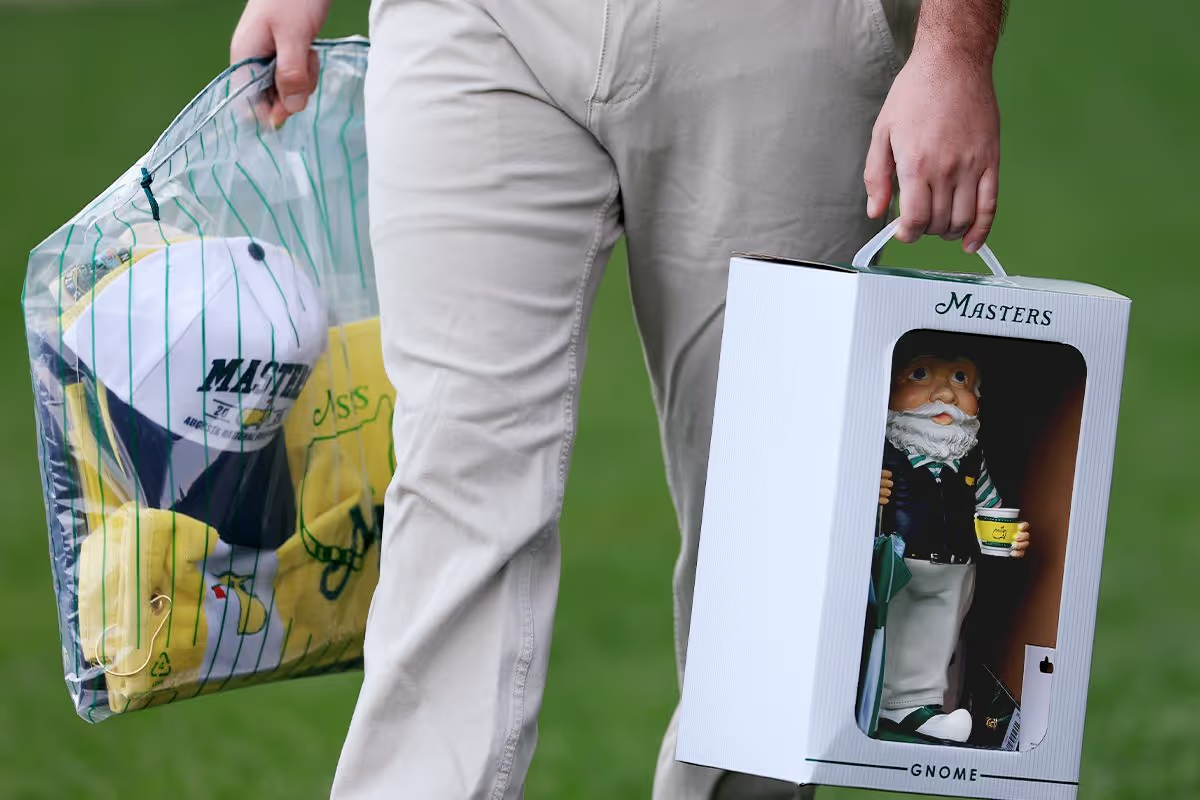
Phones are shunned. Merch is finite and only available on-site. For most people, getting there represents a years-long ambition. The whole thing is calibrated to make you feel the moment, not document it.
The gnome content still happened — it always will, people want something to show for it, but watch those #MastersHaul videos. They're different. They're reverent. People use the object as a launchpad for talking about their day. The shot they witnessed. Who they sat next to. The souvenir is doing its actual job: memory trigger, not memory substitute.
That's the gap. That's the whole thing right there.
So what do we actually change?
The strategic tension is real. Double down on product and you nearly guarantee social traction — but you've trained your audience to come back only if the bag is better next time. You've entered a competition you cannot win long-term. Strip it down and you risk feeling sparse in a moment economy where guests have been conditioned to leave with something.
BUT THE DEEPER FIX ISN'T THE EXPERIENCE VERSUS THE SWAG
It's what we measure.
We need to start tracking customer LTV alongside social shares. Tracking across the journey. Knowing how many touches we’re delivering. Understanding whether the attendees are still clients two years later. Whether they deepened their spending. Whether they showed up again — not for the thing, but for us. Experiences aren't just impressions. They're instruments for moving people through a funnel and keeping them there. Until we measure them that way, the water bottle will always win the budget conversation.
The branded umbrella got counted. The sound tunnel never had a chance.
The brands getting this right make the object feel inevitable.
Not a consolation prize for showing up. Not the architecture around which everything else is organized. They build the experience first — really build it — so guests are absorbed enough that the bag is an afterthought. When the souvenir arrives, it lands as an extension of a moment that already happened. A trigger for memory rather than a substitute for it.
That requires building experiences you can't easily put in a KPI deck. It requires making the case for investment that pays back over years, not posts.
It's harder. It costs more to defend. And it's the only approach that actually compounds.
Your brand equity is not a water bottle. Stop spending it like it is