
Fever is everywhere. Felix & Paul is gone.
The first, a tech company that has built a formidable machine for producing, marketing and selling live shows in more than 150 cities, continues to churn out mediocrity. The second, a studio with three Emmys, an Auggie, and the first spacewalk ever filmed in 360, lays off its entire team and goes dark.
One didn't cause the other. They weren't even competing. But put them next to each other and you can see the shape of what's coming for this beloved experiential industry of ours.
It already has a name: Enshittification
Cory Doctorow coined the term for tech platforms: the slow rot whereby a thing that was good for people becomes good for business, then becomes good for nobody except the spreadsheet. Music got playlist filler. Movies got the content dump. Publishing got SEO chum. Local news got whatever's left of local news: Facebook links and weird ads.
Enshittification always arrives the same way. Optimization shows up. Data shows up. Private equity shows up. Art quietly dies, not in a big explosive Hollywood fight, but in a series of reasonable-sounding financial decisions made by people who were never in the room where the craft and the work and the magic got made.
Experiential is just starting to be taken seriously. We can’t get enshittified before we've even finished arriving.
What’s wrong with the Fever model
In July, the Seattle Times published Gemma Wilson's investigation of Fever, months of reporting on a $1.8 billion company that is behaving like every other tech company.
Read the article, but here's the gist: A murder-trial "immersive theater show" performed by underrehearsed actors on a set ordered largely from Amazon, and the audience delivering its verdict by QR code. A casting notice offering Seattle's minimum wage, $21.30 an hour, for a show selling $40 to $70 tickets. Artists who wouldn't speak on the record because they can't afford to lose the work. No program. No credits. Nobody's name anywhere.
This is what you get when shows are created, according to Fever's own executive, by reading "audience demand, local market trends, cultural preferences, discovery and booking behavior." And they’re not shy about their reliance on AI, either. Their newsroom advertises a partnership with OpenAI. When I walked their "Mind of a Serial Killer" in New York in April, most of the wall copy was AI-generated. Shrines to murderers, written by nobody, scant details on the victims.
Here is what I want the decision-makers reading this to sit with, because this isn't a rant about one company:
The problem is not scale. Scale is how artists get paid; scale is how an idea reaches a city that would otherwise never see it. The problem is a show with no author and no soul. When nobody's name is on it, nobody's taste is in it. And taste is the entire product. You cannot A/B test your way to a point of view.
What happened to Felix & Paul
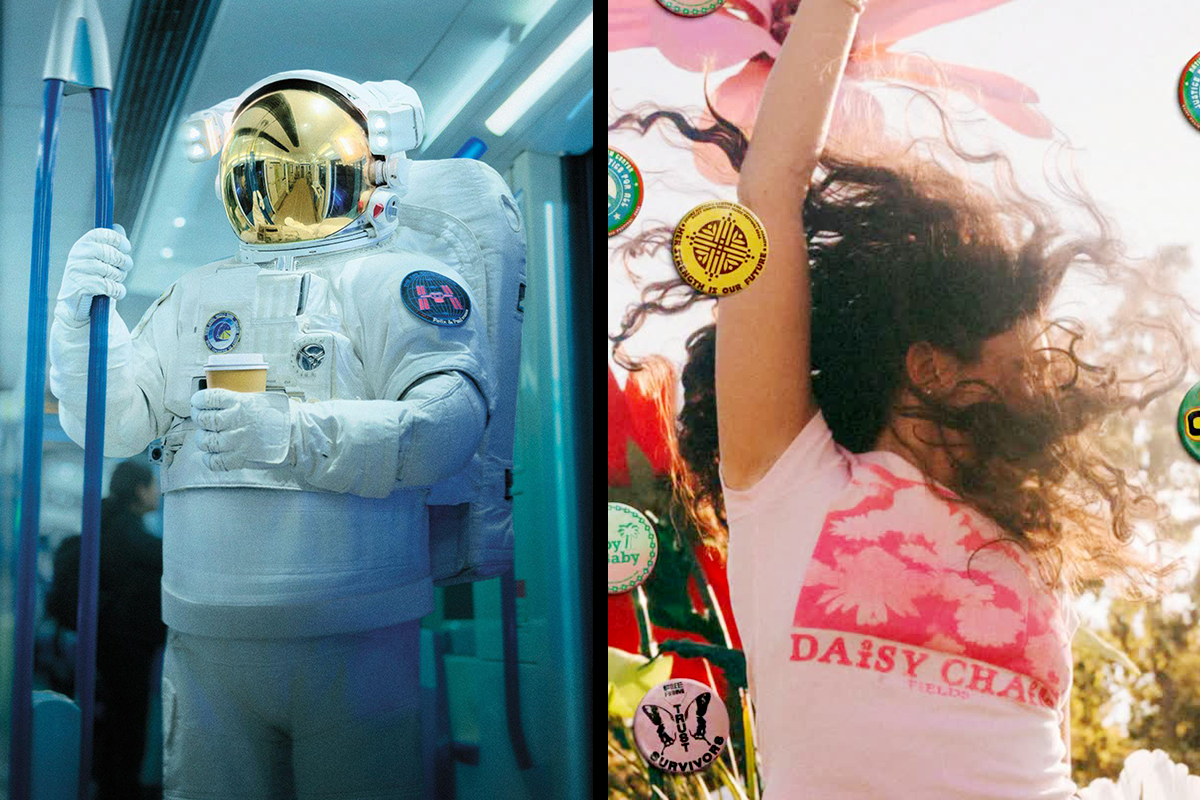
I saw The Infinite, the exhibition Felix & Paul Studios built with PHI Studio from of footage filmed over two and a half years aboard the actual International Space Station. I wept. Actually wept, in public, in front of my colleagues, floating outside the ISS with strangers all reaching for the same thing that wasn't there.
More than half a million people went through that show. And in June, Felix & Paul's Las Vegas free-roam attraction, Interstellar Arc, won the Auggie for Best Location-Based Entertainment. Just two months later, they laid off the whole team and Interstellar Arc stopped selling tickets.
Some of that is Vegas. Visitation has been sliding all year, and Vegas is a strange, brutal market that punishes anything an out-of-towner can't picture before they land. Paul Raphaël said pretty much that back in March, when asked what was hardest about the business:
The toughest part is communicating what the experience is… If you're promoting a movie, you just need to get a sense of who are the actors, what's the story, what's the genre. If it's a theater, if it's a concert, everyone knows what those are. No one knows what this is. — Paul Raphaël on Interstellar Arc
But Vegas isn't the whole story. And neither are the goggles.
For a decade, the most beautiful immersive work in the world was underwritten by companies like Meta, like Apple that needed prestige content to sell headsets. That was never really a market; it was patronage. And this year the patronage ended. In January, Meta shuttered three VR studios. In March, Rec Room announced it was closing. On August 21, three days after Felix & Paul went quiet, Apple cut more than 200 jobs and scaled back its Immersive Video team.
The money that had been buying extraordinary work stopped buying it. And nobody stepped in to replace it. (For those who want more, here's a great take on Felix & Paul's story by Josh Rubin, with input from our own XP Council members Lou Pizante and Lou Murray.)
So, what do we do about it?
If you decide what gets made and who makes it, you are not a bystander to the enshittification. You decide where we go next. Every time you choose to push a boundary instead of staying safely within it, is a vote. Every time the safest option wins because it was the easiest to explain in a deck to the finance guys, the slop gains a market share point, and it does not give it back.
That's how it starts. It's already started.
Four things you can actually do:
Be bold about who is on your list. If your shortlist of partners includes three holding-company shops and the incumbent, you have already chosen the average. Put one studio on it that scares you a little.
Treat taste as a line item. Taste costs money and it does not benchmark. If your procurement process can't price it, your procurement process will select against it. Every time, automatically, without anyone deciding to. Magic is more expensive.
Make sure there's a name on the work. Ask who wrote it. Who is directing it. Ask for their last three projects. And credit them publicly. An industry that doesn't name its makers allows their magic to remain invisible, and then wonders why everything looks the same.
Take one real swing a year. Not the whole portfolio. Hollywood runs blockbusters so it can afford the films that matter. We should be honest that we're doing the same thing, and then actually make the ones that matter.
And then there's Olivia
On August 29, Olivia Rodrigo put 45,000 people in a park in Irvine for one day. Fourteen billed acts across two stages, programmed with no overlapping sets so nobody had to choose. Bikini Kill, Doechii, Chappell Roan, Garbage, Mitski, the Breeders. Every one of them played free. It raised $10 million for ten nonprofits; Melinda French Gates matched it, and the total hit $20 million. Tickets sold out in thirty minutes.
Look at what actually made that possible, because it isn't the lineup. Olivia commissioned it herself. She set the terms. And fourteen acts said yes for nothing — not because the money was right, but because her brief was worth saying yes to. A great brief is a magnet. It pulls talent, partners and money toward it in a way no rate card and no race-to-the-bottom RFP ever will.
It was not a perfect day. Mid-90s heat and almost no shade for general admission. Five cooling stations, one of them VIP-only. Umbrellas and parasols banned by a festival whose entire design language was decorative umbrellas. Food lines that ran the length of a whole set. The best sightlines went for $1,250 at an event about equality. The New York Times' Lindsay Zoladz aired all of it here, and then said the useful thing: she aired it in the spirit of what Rodrigo argued all day. Improvement is always possible.
At the end of the night, Stevie Nicks finished “Landslide” with Rodrigo. The stage lights went out—and she made them turn the lights back on because she had something else to say:
I’m somewhat awe-struck that she could do all this, because it’s so hard. You have no idea, putting something together with all these people. — Stevie Nicks on Olivia Rodrigo
We do know. We know how hard it is to make something this ambitious, how many people have to choose the harder option and how much someone has to be willing to pay for it. That is why the answer to enshittification isn’t less scale. It’s making sure that, at any scale, there is still somebody’s name on the work—somebody with a point of view, and somebody who will be embarrassed if it’s bad.
To practice what we preach: Olivia Rodrigo’s Daisy Chain Fields was produced by C3 Presents, majority-owned by Live Nation, at the City of Irvine's Great Park. PSQ Productions operates the venue.