SXSW 2026 felt like an experiential scavenger hunt.
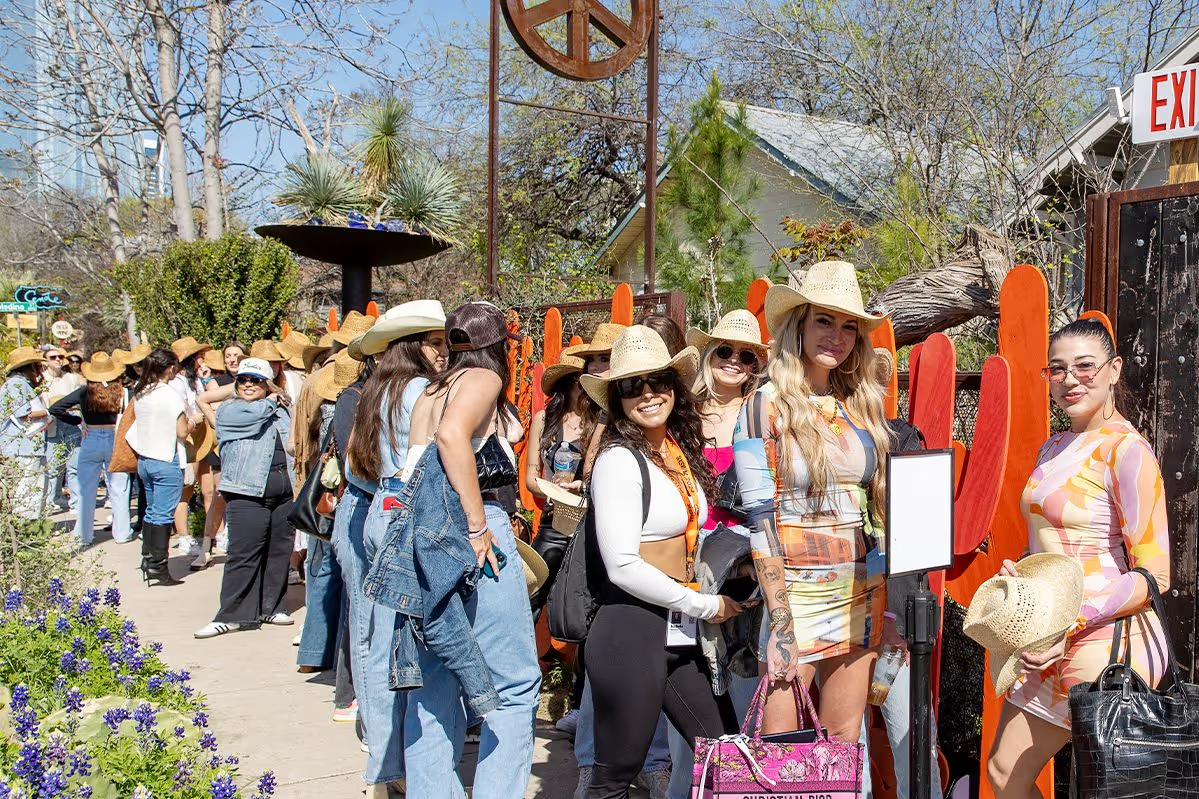
Downtown Austin became a sea of lines as dozens, sometimes hundreds of people, stood outside The Fast Company Grill, Inc. Founders House, Paramount+ Lodge, ADWEEK House and what felt like every country’s board of tourism waited to get inside — shifting their weight, checking their phones and watching others decide if it was worth it.
Once they made it through the door, the pace held, with a drink in hand, a quick scan of the room, maybe a photo and then a turn back toward the street, pulled less by anything inside than by the sense that something else was already happening somewhere else. In, out, on to the next.
WHERE SCHEDULES OUTPACE EXPERIENCE
Before even touching down in Texas, SXSW attendees’ calendars were already filled with brand houses, media events, panels, dinners and offsites. On the ground, overscheduling turned into constant recalibration, with conversations cut short as people tracked where they were expected next and how to dodge downtown construction to get there.
This behavior isn’t contained to SXSW. It shows up anywhere the calendar fills faster than the experience can hold. A guest doesn’t need to engage deeply to get something out of a drink, a photo or a short interaction with the space, so they rarely stay long enough to see what else might be there.
Even in strong exchanges — like SXSW 2026’s official panels where attendees queued for 2+ hours to attend a Q&A with Steven Spielberg or set early morning alarms to register for How to Design a Successful Work Culture — there’s a quiet awareness of the exit and a sense that staying longer means missing something else, including those playing on their phones and sneaking out early.
Attendance was high, but attention was fragmented.
IF ATTENDANCE IS EASY, WHAT ARE WE ACTUALLY MEASURING
The industry still treats attendance as proof of success.
Full rooms, long lines, RSVP lists, foot traffic, social posts that signal someone was “there.” At SXSW 2026, those signals were everywhere, but on their own, they didn’t hold much meaning. A packed space didn’t mean people stayed. A line around the block said very little about what was happening inside. Most posts were captured within minutes and moved on just as quickly.
When everything is easy to enter and just as easy to leave, presence stops carrying weight. It becomes something you can pass through in minutes. And yet, most reporting still builds around it, as if getting someone through the door is the same as holding them there.
WHAT ACTUALLY COUNTS NOW
If attendance is a given, measurement has to shift to what happens after someone walks in and realizes they could leave at any point.
There’s a version of time that’s enforced — waiting in line, moving through a queue, pausing long enough to grab a drink or take a photo. And then there’s the stretch where someone has already gotten what they came for and decides to stay anyway. That’s where the experience either holds or it doesn’t.
Call it earned time. The minutes no one is required to give.
At SXSW 2026, most people stopped at the first layer. They completed the obvious interaction and left. Very few went further because, in a week built on overlap, staying costs something. Every extra minute in one place trades off against another.
The experiential industry has spent years driving attendance, but when access is high and options are constant, attendance stops meaning much. The work now is understanding what holds once someone is inside. Because if someone can leave at any moment and doesn’t, that’s the signal.