As the experiential industry grows up, it comes with clearer expectations.
Heading into 2026, the focus is shifting away from volume and velocity and toward experiences built for attention, presence and memory. Teams want time. Crews want support. Partners want clarity. Audiences want experiences that deliver something real.
Across agencies, venues and production floors, the same signals keep surfacing. Earlier commitments. Healthier timelines. Smarter investment. Clearer impact.
Together, these five signals reflect how the experiential industry is shaping live experiences for 2026.
1. EXPERIENCES WILL BE DESIGNED FOR ATTENTION, NOT ENDURANCE
Fewer moments will carry more weight.
This shift shows up in experiences that are intentionally edited:
- Shorter runs of programming.
- Fewer scene changes.
- Clear peaks that anchor the experience instead of constant stimulation.
- Time for guests to settle into a moment and stay with it, rather than being pushed from one beat to the next.
When experiences respect attention, people stay present longer. They remember what happened. They leave feeling satisfied instead of spent. That shift sets the tone for everything that follows.
2. SMALLER ROOMS WILL PRODUCE DEEPER ENGAGEMENT
Intimate formats will drive influence and trust.
Scale remains part of experiential work, but smaller rooms will carry more cultural weight in 2026. Focused gatherings create space for conversation, connection and exchange.
These formats could manifest as programming such as:
- A 12-person dinner in Miami during Art Basel, hosted in a private home after the fairs close, where artists, collectors and curators stay late.
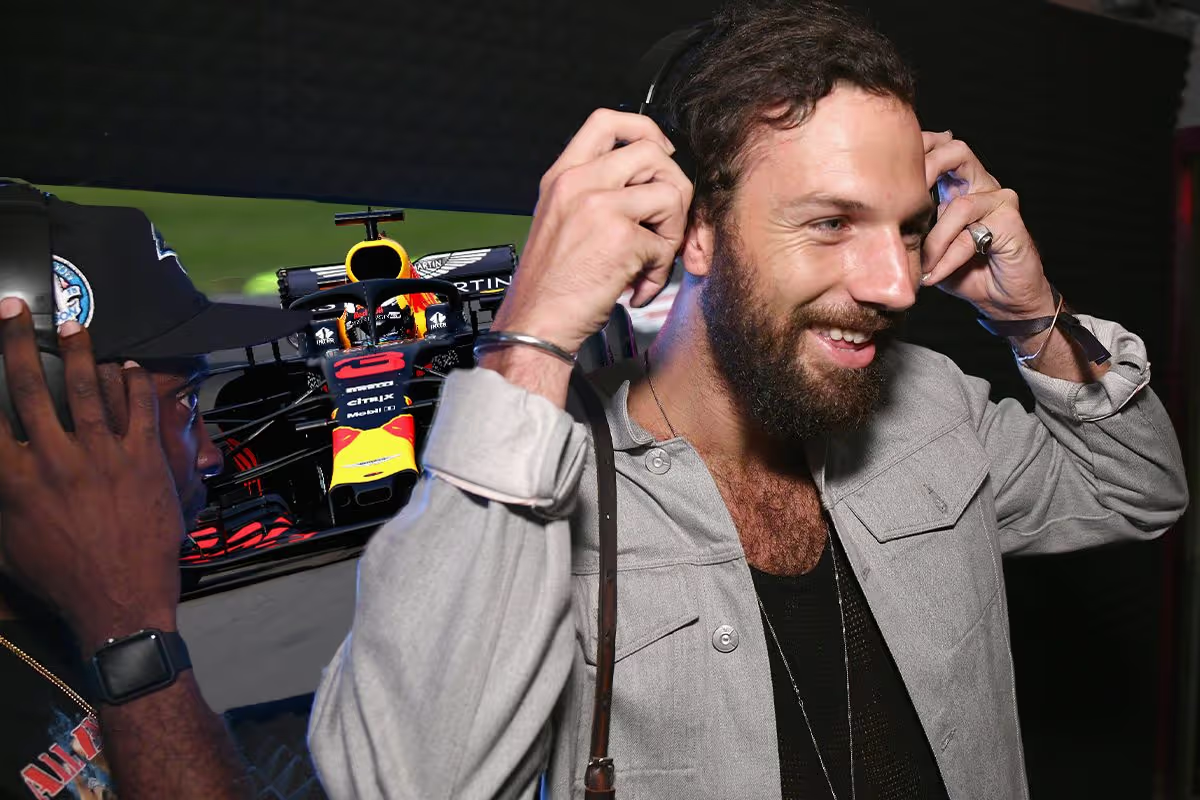
- A pop-up listening room during Formula 1’s Las Vegas Grand Prix weekend, where engines are still audible outside.
- A late-night walk through an empty Olympic swimming arena after finals end.
In these settings, attention holds. Conversations deepen. Impact travels through stories shared afterward. What people remember is who they met and what shifted for them.
3. PLACE WILL SHAPE THE EXPERIENCE MORE THAN PRODUCTION
Location will stop being a backdrop.
In 2026, where an experience happens will actively shape how it unfolds. Pace, sound, movement and duration will be informed by the cities themselves, not overridden by production. Experiences will be designed to sit inside a place, not flatten it.
This is most visible in cities with strong cultural rhythms. For example, in a city like New Orleans:
- Guests arrive when they arrive, often coming from somewhere else nearby.
- Music bleeds in from the street.
- Food follows its own timing.
- The experience moves with the neighborhood, not against it.
- As the night shifts, people drift out naturally and the ending feels earned rather than announced.
When place leads, the experience becomes inseparable from its setting. The memories people carry are tied to the city as much as to the moment.
4. AI WILL HANDLE OPERATIONS SO PEOPLE CAN LEAD
Technology will support the flow of work on-site.
By 2026, AI will support the operational layer of events even more:
- Schedules update when speakers shift.
- Guest information arrives organized before doors open.
- Follow-up communication deploys while engagement remains fresh.
Then, on-site, people will lead. Producers will move through the space. Brand teams will stay engaged in conversations. And decisions will happen in real time, guided by experience and observation. With fewer operational distractions, teams can focus on how the experience is landing.
5. POST-EVENT MEMORY WILL BE DESIGNED AS CAREFULLY AS THE EVENT ITSELF
How it ends will matter as much as how it begins.
In 2026, live experiences will be judged by what stays with people after they leave. The close will be intentional and the follow-through will feel considered.
This shows up through:
- A final shared moment that signals closure rather than an abrupt exit.
- A message or artifact delivered the next day that helps guests remember what they felt.
- Language people can use when they tell the story later.
When the ending is clear, the experience carries forward. Guests know how to talk about it, who they shared it with and why it mattered.
THE XP LAND READ ON 2026
Taken together, these shifts point to a more disciplined and more human future for live experience. Experiences are being designed for attention and presence. Smaller rooms create stronger connections. Place shapes how moments unfold. Technology supports the flow without taking over the room. Endings are crafted with the same care as beginnings.
This is the opening signal.
As we move into 2026, XP Land continues to explore the trends we’re seeing on the ground, inside the rooms and across the moments that matter. You can expect us to go deeper into how these shifts show up across sports, festivals, B2B and culture, grounded in what is actually being built right now.

.png)