
The word storytelling is everywhere right now. In decks. In bios. In strategy docs that never make it past slide twelve. The skepticism is earned. But in experiential, storyteller isn’t a tagline. It’s the difference between work that holds and work that fades. It’s structure, pacing, and discipline.
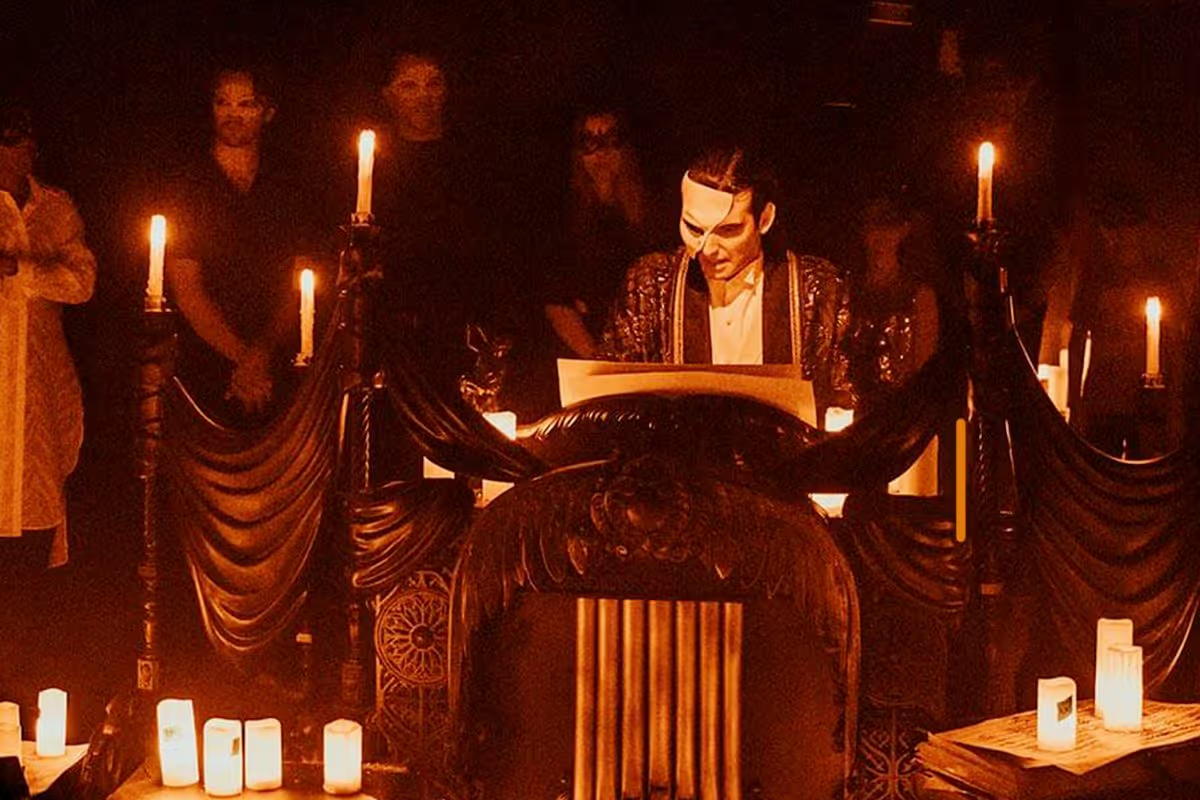
I felt this immediately walking into Masquerade, an immersive adaptation of The Phantom of the Opera staged across six floors of a former retail building in Midtown Manhattan.
STORYTELLING DONE RIGHT: MASQUERADE
Before anything began, the story had already started.
Guests gathered upstairs dressed in black, white and silver, masks in hand. A violinist played nearby. Actors moved quietly through the room, making eye contact before taking someone gently by the hand. Nothing was explained, but everyone understood how to behave. The structure was doing the storytelling.
From there, the experience guided us through ballrooms, corridors and rooftops in a deliberate sequence. Each transition changed our proximity to the Phantom and revealed more of his world. Context came first and then emotion followed.
At the beginning, I watched from the edge. Later, I stood beside Christine. Eventually, I followed the Phantom into darker spaces and encountered fragments of his past that reshaped my understanding of him. By the time the chandelier appeared, the ending felt inevitable — not surprising, but earned.
The space never changed. My relationship to it did.
That’s storytelling.
WHY MASQUERADE WORKS
Spoiler: It’s all about structure:
Structure earns the reveal. The Phantom’s presence is felt long before he appears. Environments, characters, and tension establish context so his entrance lands with meaning.
Structure holds attention. Movement between spaces feels continuous. Transitions extend the narrative rather than interrupt it, so attention never resets — it deepens.
Structure lets the environment speak. Architecture, objects and spatial relationships communicate power, isolation and hierarchy without explanation. The audience learns the world by moving through it.
WHEN THE FOUNDATION IS MISSING, STORYTELLING FAILS
Most experiential work talks about story but designs for logistics. When structure comes last, the symptoms are familiar:
- Arrivals feel abrupt
- Guests hesitate, unsure where to go
- Moments stack without landing
- Emotional peaks arrive before context
No amount of production fixes this. Story doesn’t live in messaging or spectacle. It lives in sequencing, pacing and intention.
Anyone can call themselves a storyteller. Doing the work means designing how people experience meaning — not just what they’re told.