
The experiential industry doesn’t have a demand problem. It has a language problem.
We’re building brand worlds, billion-dollar attractions, sold-out tours, traveling festivals, immersive shows, and hybrid digital-physical experiences. And we still can’t clearly explain what industry this is.
Everyone says “experiential.” Everyone means something different:
- When a CMO says experiential, he means brand activations.
- When a CFO says it, she means an expense line.
- When an investor hears it, they struggle to model risk.
- When an artist says it, they mean something visceral and human.
- When a less ambitious marketer hears it, they picture a cocktail party with branded napkins.
That confusion isn’t cosmetic — it’s economic.
Because unified language is how industries get funded. It’s how projects get greenlit. It’s how categories earn respect.
ONE WORD, MULTIPLE BUSINESS MODELS
One breakthrough in a recent XP Council conversation was this: not all experiential businesses operate on the same economic engine. In some cases, the experience is the product. Attractions, tours, festivals, cultural gatherings, live spectacles. Tickets are sold. Revenue is direct. In other cases, the experience drives demand for another product. A platform. A subscription. Brand affinity. Media value.
But our worlds are colliding and converging
So here’s where it gets interesting and complicated.
Marketing events now generate their own revenue streams. Attractions operate like media companies. Product launches behave like cultural festivals. The old binary mindset — product or marketing — is dissolving.
When language lags, value compresses
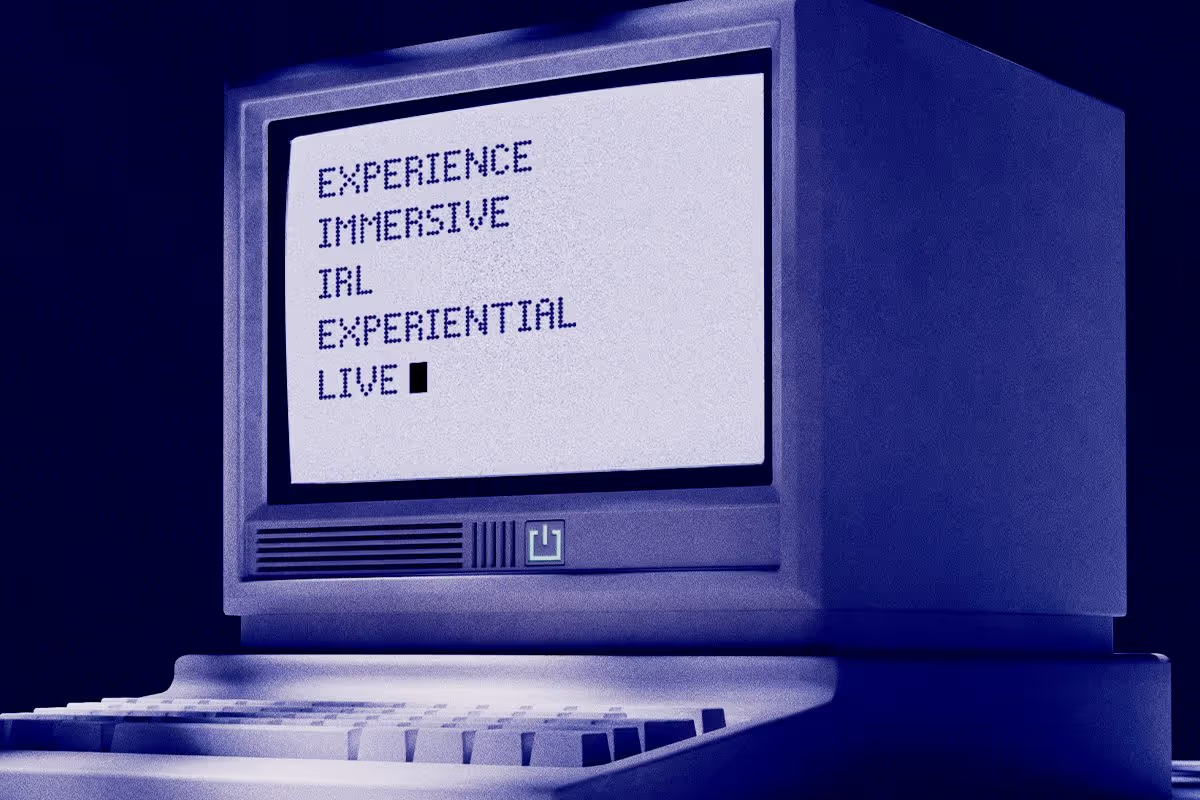
The business model is mutating in real time. The language hasn’t caught up, so we default to catch-alls. Experiential. Immersive. IRL. Broad labels that blur more than they clarify. But what we do isn’t a marketing trick. It’s not a buzzword. It’s not a cocktail party with better lighting. It’s how culture moves now.
When everything is AI slop, what’s scarce is real presence. When feeds are flooded, what cuts through is something you can actually stand inside (and hopefully get goosebumps). Experiences are where brands become worlds. Where IP becomes a place. Where audiences become active participants.
That’s not a tactic. That’s power. And power deserves precision.
DEFINE IT OR WATCH IT GET DIMINISHED
If we don’t define this industry, it will stay misunderstood. If it stays misunderstood, it stays undervalued. And undervalued things don’t get investment. They don’t get respect. They get cut.
XP Land is elevating the conversation. And we’re beginning to define the vocabulary and economic models shaping this space — out loud and in public.
We’ll publish what we learn.