
Reality used to be free. You just opened your door, stumbled outside in yesterday’s sweatpants, and voila—unlicensed, unsponsored, unmonetized Reality. No ticketing page, no waiver, no brand partnership with Mountain Dew.
Now? Reality has a velvet rope, a merch table, and a waiting list. Immersive entertainment has turned reality into a marketplace. The question is no longer “What is real?” It’s: “Who owns the rights to real—and is there a two-drink minimum?”
IP HOLDERS OWN REALITY
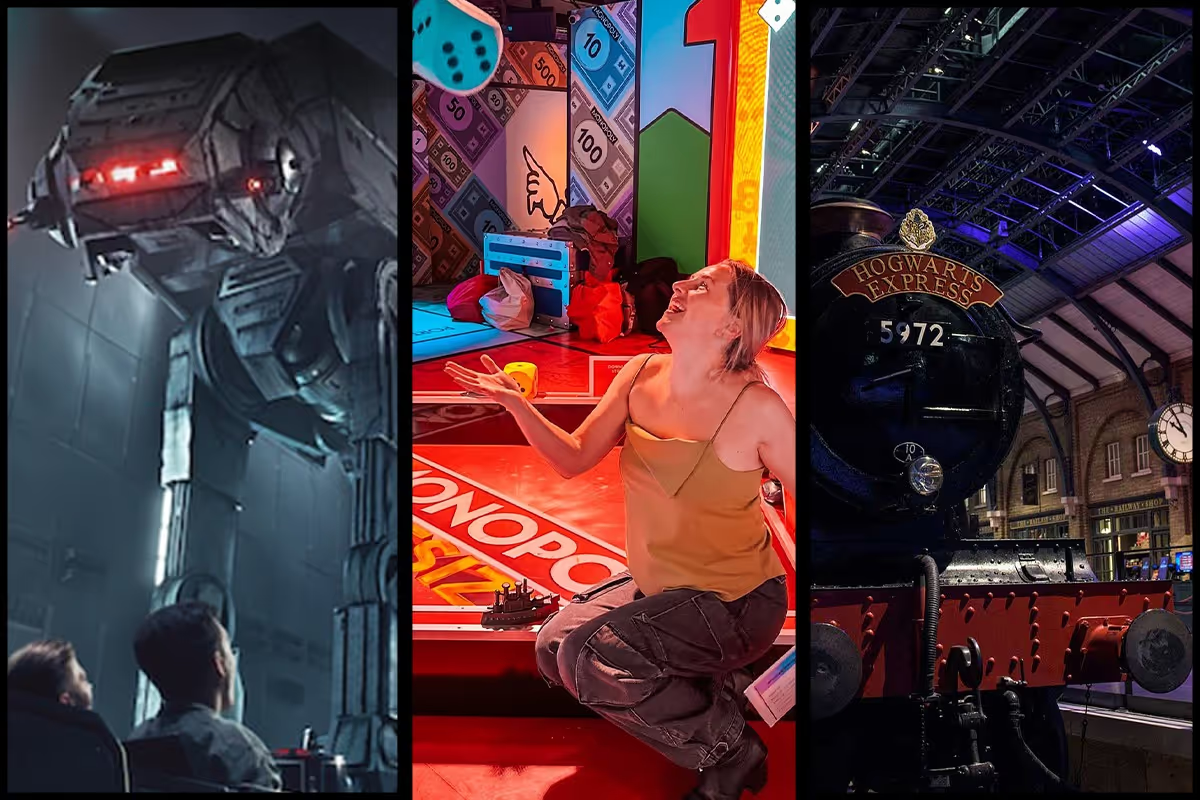
... And immersive entertainment is their favorite playground. Want to sell tickets? No need to invent a new world; just rent Hogwarts for the weekend. Warner Bros. has turned Harry Potter into a timeshare, complete with overpriced wands and adolescent nostalgia. Hasbro did the same with Monopoly Lifesized, where you can finally go bankrupt in person—but with cocktails. And Banijay (yes, the Big Brother people) is now buying immersive theatre companies like they’re collectible NFTs.
Netflix doesn’t license; it squats. Stranger Things: The Experience is basically a giant reminder that Eleven is still sad and the ‘80s will never leave us alone, while Squid Game: The Trials is a gym class run by debt collectors who just discovered DMX lighting. And now Netflix House is opening, so you can literally walk into your algorithm and get merch-shamed by your own queue.
Of course, Disney nailed this decades ago: Star Wars: Galaxy’s Edge is an intellectual property strategy conveniently located next to a cart selling $7 Diet Cokes and turkey legs the size of a toddler.
LAWYERS OWN REALITY
Immersive entertainment creators love to borrow: a little theatre here, a little carnival there, maybe some unlicensed sword-fighting under-the-table. Unfortunately, the legal system was built for broadcast TV and thinks “remix” is something that happens at a wedding reception.
Now lawyers are busy trademarking participation itself. Social deduction games? Claimed. Branded scavenger hunts? Pending litigation. Karaoke sing-alongs? Good luck humming without legal counsel. If this continues, we’ll all need to sign a licensing agreement just to play charades at Christmas.
On paper, reality belongs not to the dreamers, but to the attorneys billing in six-minute increments.
CREATORS OWN REALITY
Yes, originality can still break through. Meow Wolf transformed a former bowling alley into a hallucinatory multiverse with a gift shop. Sleep No More turned a New York warehouse into a noir fever where Shakespeare collides with Hitchcock and everyone suddenly takes up jogging.
But success is a double-edged blade. Yesterday’s grassroots art museum becomes today’s “Instagram Playground™” with corporate sponsors and a gift shop that only takes Dogecoin. Independent creators own reality in flashes of brilliance—right up until someone with deeper pockets buys the sequel rights.
AUDIENCES OWN REALITY
For all the contracts and court filings, audiences still get the final vote. Reality lives wherever people line up and post selfies. Because people prioritize recognition over risk, comfort and familiarity win 9 times out of 10. That’s why The Bridgerton Ball sells out while a warehouse masterpiece down the street performs for twelve monastic hipsters and a confused ferret.
But there’s still a choice. When audiences reward originality, when creators resist the lure of the licensing deal, reality can stay open source. Not leased. Not franchised. Not bundled with your Disney+ subscription.
So the next time you step into a lightsaber dojo, a Regency ballroom, or a neon fridge that leads to another dimension, ask yourself: Whose reality am I stepping into—and who’s cashing in when I play along?
NOBODY OWNS REALITY
In truth, reality is never owned outright. It’s a messy custody battle between corporations writing blueprints, lawyers fortifying borders, creators sneaking in side doors, and audiences deciding whether to walk through or just scroll past on TikTok.
The danger isn’t that someone will own reality. It’s that we’ll forget we can reclaim it. Because here, really, is the point: Reality isn’t property—it’s a commons. A loud, chaotic, gossipy commons where interdimensional grocery clerks, rebel alliance smugglers, and Shakespearean voyeurs can coexist.
This article is part of an ongoing exploration of the evolving immersive entertainment landscape—how we lost our way, who’s fighting to bring meaning back, and why it matters. For more on what this column is all about, start with Is This Article Immersive?, where I lay out the mission: reclaiming immersion from the gimmick merchants and giving it back to those who create experiences worth disappearing into.
Lou Pizante is the co-founder of The Experientialists, where he navigates the thrilling, occasionally over-budget world of location-based entertainment with equal parts legal strategy, financial discipline, and a healthy respect for artistic chaos. He invests scale-stage capital in experiential ventures, while advising real estate partners on transforming retail into entertainment districts. In parallel, he currently serves as the General Counsel and Corporate Development Lead at RPM Raceway, as well as advising Rome-based Lux Entertainment, home of the Balloon Museum and Color Hotel. He is an XP Land XLISTER, WXO Council Member, and Blooloop 50 Immersive Influencer. He also writes The Experientialist newsletter and a Blooloop column, both of which have been described as an industry secret that absolutely no one keeps.